


-
MENU









WLL vs. Breaking Strength: What's the Difference and How to Calculate
WLL vs. Breaking Strength: How to Calculate Cargo Securement Working Load Limits Legally
When securing cargo, understanding the difference between Working Load Limit (WLL) and Breaking Strength is essential for both safety and FMCSA compliance.
Many people assume a strap's breaking strength is its usable capacity—but that's not the case.
What's the Difference?
Working Load Limit (WLL)
WLL is the maximum load a tie-down can safely handle during normal use. This is the number used for cargo securement calculations and legal compliance.
Breaking Strength
Breaking Strength is the force required to cause the equipment to fail under testing conditions. It is not the safe working capacity. Crucial Note: Never budget your cargo securement around the breaking strength. Breaking strength is not an operational index.

The Golden Ratio: What is a Safety Factor?
To transition safely from a catastrophic failure point (Breaking Strength) to a safe daily rating (WLL), manufacturers employ a Design Factor (often called a Safety Factor). For the vast majority of webbed synthetic cargo tie-downs, transport chains, and wire ropes used in logistics, the industry-standard design factor is 3:1.
This means your tie-down’s structural threshold is three times tougher than its operational rating. Mathematically, the formula looks like this:
Formula:
WLL = Breaking Strength ÷ Safety Factor
Example:
15,000 lbs ÷ 3 = 5,000 lbs WLL
Quick Visual
Breaking Strength
    15,000 lbs
         ↓
    ÷ Safety Factor
       (3:1)
         ↓
Working Load Limit
     5,000 lbs
How to Calculate Legal Cargo Securement Capacity
FMCSA regulations - The Department of Transportation enforces cargo securement through the FMCSA under Title 49 of the Code of Federal Regulations (CFR), Section 393.106.
To remain entirely legal and avoid being placed Out-Of-Service (OOS) during roadside safety audits, you must fulfill the Aggregate Working Load Limit rule:
⚠️ The 50% Rule for Aggregate WLL
The aggregate working load limit of all tie-downs used to secure an article of cargo against movement in any direction must be at least 50% (one-half) of the total weight of that article.
Scenario A: Indirect Tie-Downs (Strap Crosses Over the Cargo)
An indirect tie-down is a single continuous restraint that goes from one anchor point on the trailer, passes over or through the cargo, and anchors to the opposite side of the trailer.
-
FMCSA Credit: For every indirect tie-down, the FMCSA credits you with the full WLL value of that strap toward your aggregate total because both anchor points are actively working together to pull down and generate friction.
Scenario B: Direct Tie-Downs (Attached Directly to the Cargo)
A direct tie-down is a strap or transport chain that attaches directly to a D-ring or securement point on the cargo itself and runs to an anchor point on the deck (common with heavy yellow construction iron or vehicles).
-
FMCSA Credit: For direct tie-downs, you only count 50% (half) of the WLL value of that specific assembly if it runs straight to one side, or you add them in pairs. Legally, the FMCSA assesses the system based on the absolute weakest link in that directional line.
Step-by-Step Practical Calculation Example
Let's run through a real-world legal compliance layout. Suppose you are securing an industrial steel coil weighing 32,000 lbs on a flatbed trailer. You plan to use standard 3-inch synthetic ratchet straps, each marked with a clear manufacturer stamp of 5,000 lbs WLL.
-
Determine Required Aggregate WLL: Take the total weight and multiply by 50%.
32,000 lbs×0.50=16,000 lbs of required securement capacity. -
Determine Attachment Type: You are throwing the straps completely across the top of the coil to pin it down to the deck (Indirect Securement).
-
Count the Straps: Each indirect strap gives you its full rated WLL toward the system.
-
1 Strap = 5,000 lbs WLL
-
2 Straps = 10,000 lbs WLL (Incomplete - Illegal)
-
3 Straps = 15,000 lbs WLL (Incomplete - Illegal)
-
4 Straps = 20,000 lbs WLL (Compliant!)
-
Even though 3 straps provide 15,000 lbs of capacity—which seems close—stopping there will result in an immediate DOT citation and a grounded vehicle. You must step up to 4 straps to legally cover the 16,000 lbs minimum requirement.

Quick Reference Guide for Standard WLLs
If your cargo equipment lacks clear markings or tags, DOT inspectors will automatically default to the lowest industry baseline value listed in the FMCSA tables (49 CFR § 393.108), which can severely penalize your operational capacity. Always source high-quality, clearly tagged equipment. Below are typical commercial values:
| Equipment Type | Standard Component Size | Avg. Breaking Strength | Legal Working Load Limit (WLL) |
| Heavy-Duty Ratchet Strap | 2-inch Webbing | 10,000 lbs | 3,333 lbs |
| Heavy-Duty Ratchet Strap | 4-inch Webbing | 16,200 lbs | 5,400 lbs |
| Grade 70 Transport Chain | 5/16-inch Link Size | 14,100 lbs | 4,700 lbs |
| Grade 70 Transport Chain | 3/8-inch Link Size | 19,800 lbs | 6,600 lbs |
| Grade 80 Alloy Tie-Down | 1/2-inch Link Size | 48,000 lbs | 12,000 lbs |
Three Golden Rules to Avoid Roadside DOT Fines
-
Inspect Tags Frequently: If a tag is unreadable, cut, or missing, the DOT inspector will treat its WLL as zero pounds. Protect your tags from abrasive edges using rubber corner protectors.
-
Account for Weakest Links: Your securement assembly is only as strong as its weakest component. If you connect a 6,600 lb WLL chain to a 4,000 lb WLL D-ring on your deck, the legal WLL for that entire line drops instantly to 4,000 lbs.
-
Don't Forget Length Requirements: In addition to weight capacity, FMCSA rules state you must use a minimum number of tie-downs based on item length (e.g., at least 2 tie-downs for items over 10 feet long, regardless of weight).
Final Takeaway
Calculating cargo securement parameters is straightforward once you know the core formulas, but there is no substitute for high-quality, certified tie-down equipment. Stocking your rig with premium, clearly stamped straps, chains, and binders ensures you pass commercial vehicle safety checkpoints seamlessly, protects your freight from shift damage, and ensures everyone on the road gets home safely.
Looking for professional, DOT-compliant cargo straps, heavy transport chains, or ratcheting assemblies? Check out our online store catalog for certified rigging gear designed to withstand the toughest transport demands safely.
Ratchet Straps
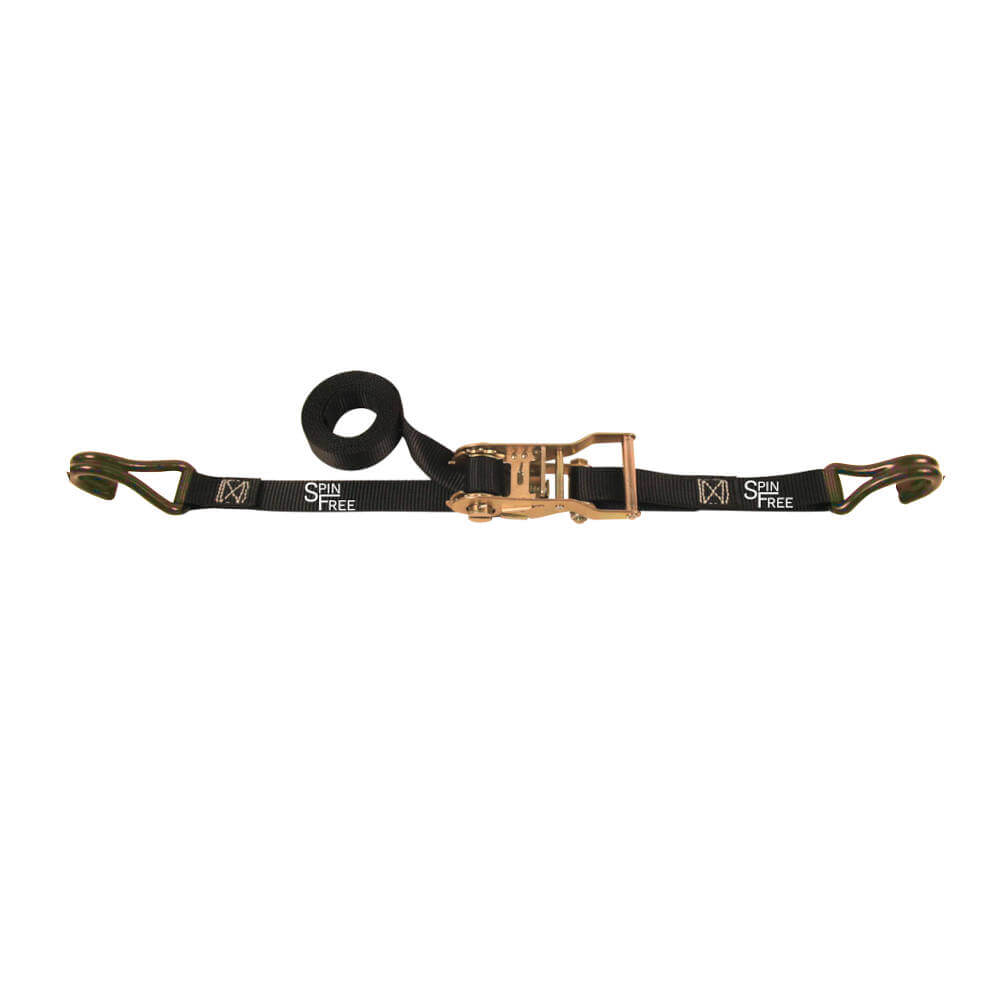
1" SPIN FREE Ratchet Straps with Wire Hooks

Quick View
1" SPIN FREE Ratchet Straps with Wire Hooks
- Price
- From $12.00
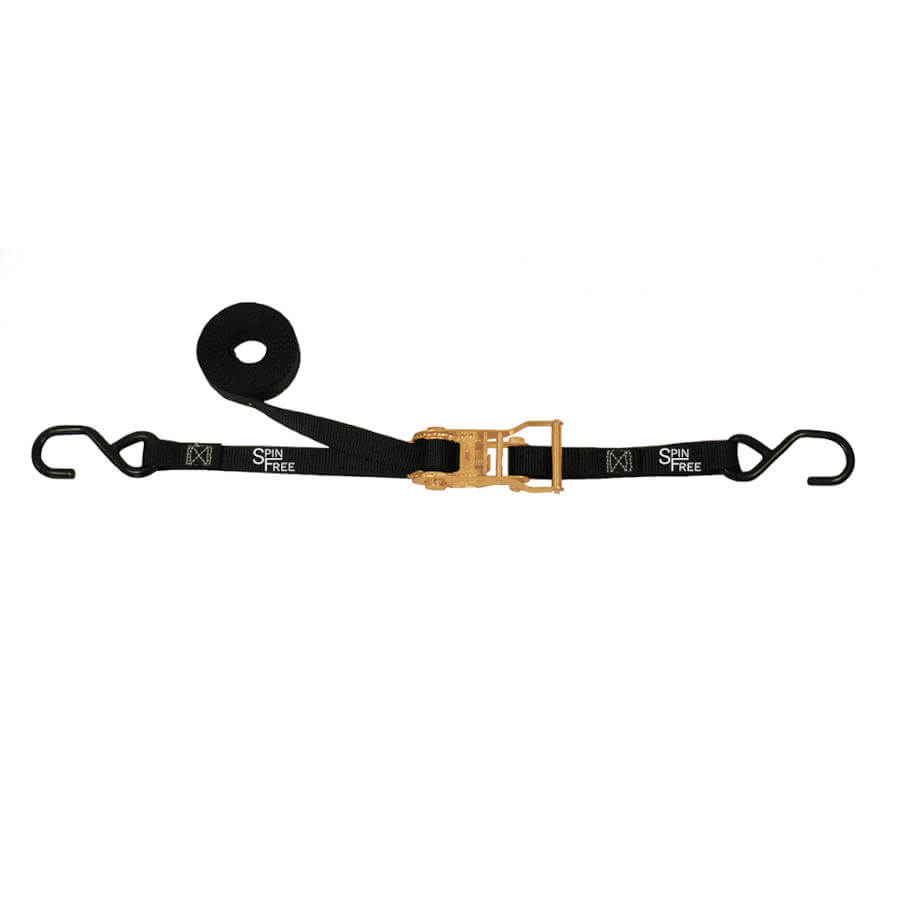
1" SPIN FREE Ratchet Straps with Coated S-Hooks

Quick View
1" SPIN FREE Ratchet Straps with Coated S-Hooks
- Price
- From $12.00
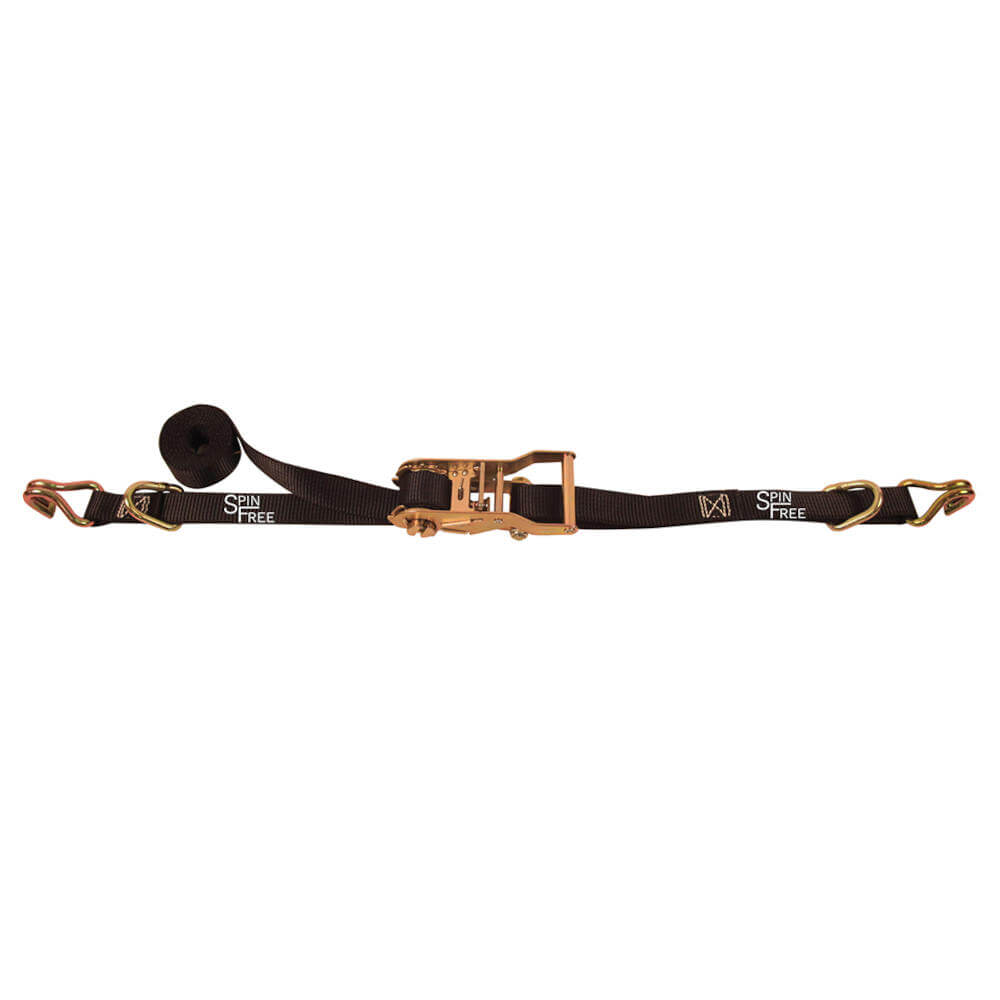
1" SPIN FREE Ratchet Straps with Wire Hooks & Delta Ring

Quick View
1" SPIN FREE Ratchet Straps with Wire Hooks & Delta Ring
- Price
- From $13.00
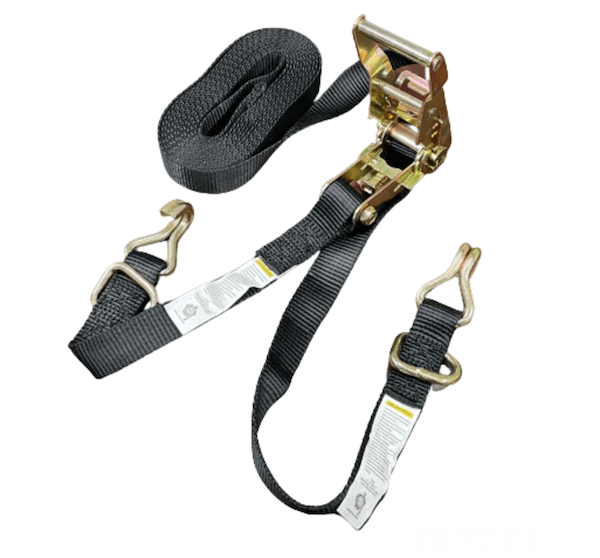
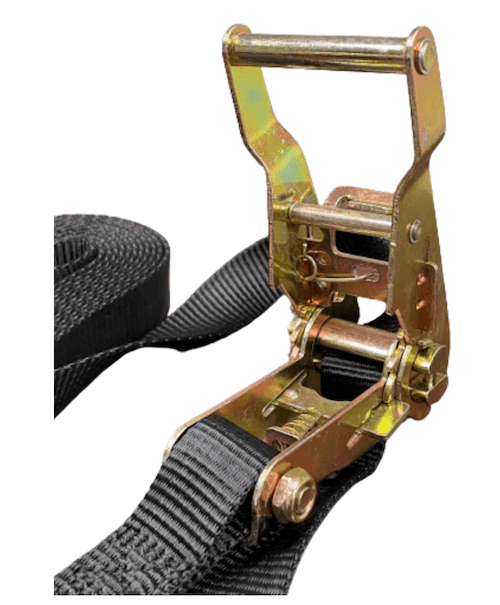
1" x 16' Ratchet Strap tie-downs with Wire Hooks & D-Rings
Quick View
1" x 16' Ratchet Strap tie-downs with Wire Hooks & D-Rings
- Price
- $13.00
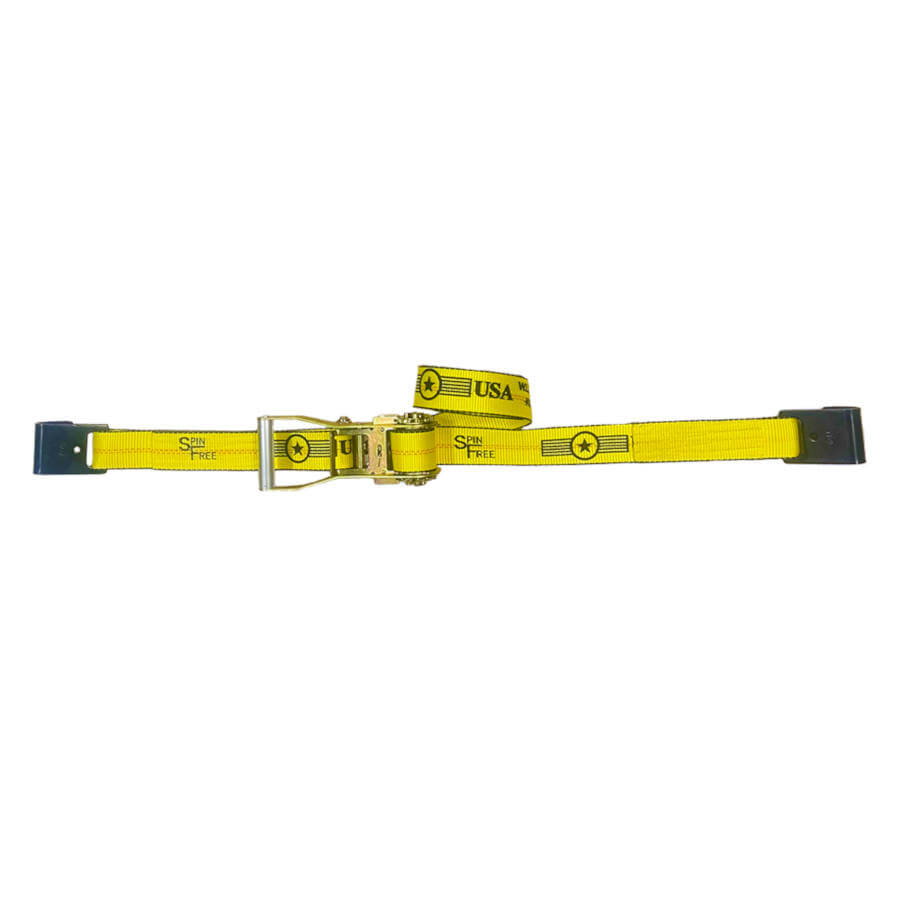
2" SPIN FREE Ratchet Straps with Flat Hooks
Quick View
2" SPIN FREE Ratchet Straps with Flat Hooks
- Price
- From $26.00
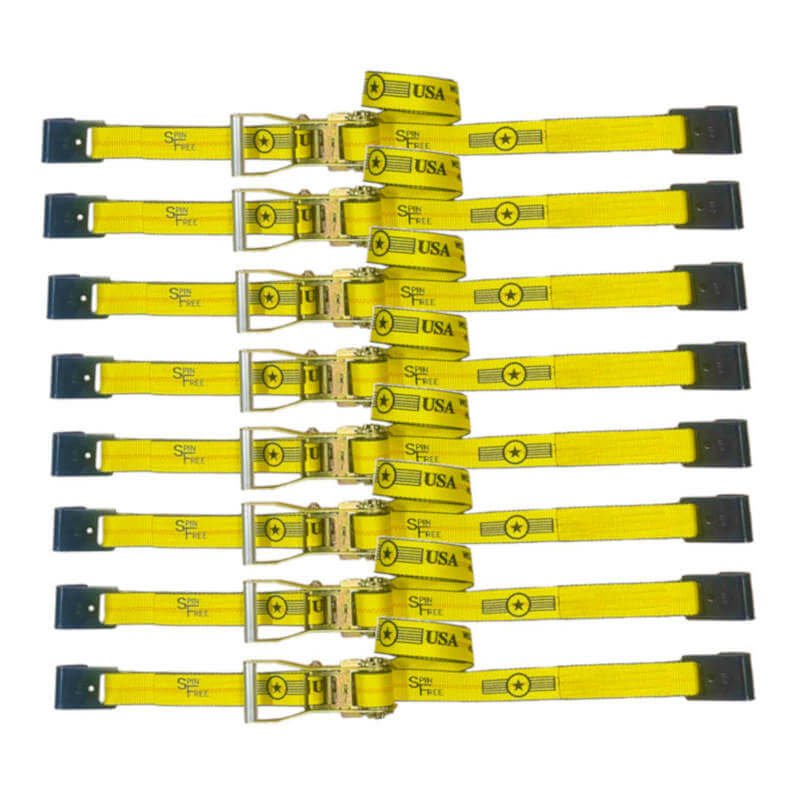
2" SPIN FREE Ratchet Straps with Flat Hooks 8-PACK
Quick View
Sale
2" SPIN FREE Ratchet Straps with Flat Hooks 8-PACK
- Price
- From $239.00
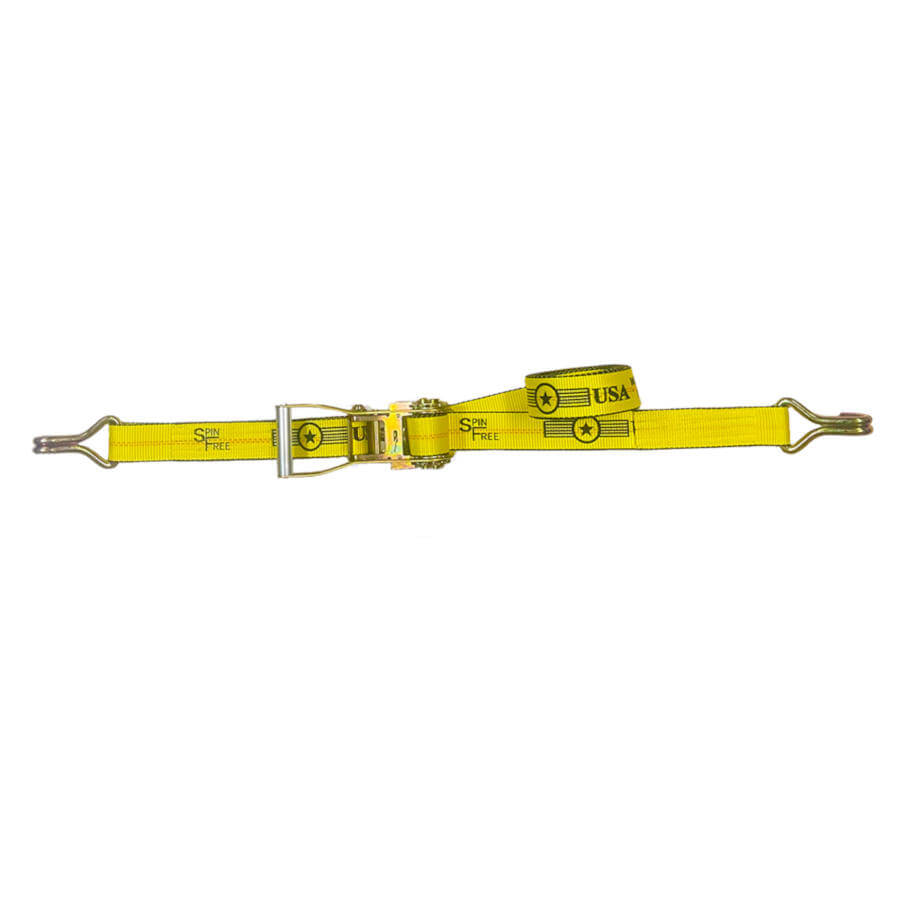
2" SPIN FREE Ratchet Straps with Wire Hooks
Quick View
2" SPIN FREE Ratchet Straps with Wire Hooks
- Price
- From $26.00
- Choosing a selection results in a full page refresh.