


-
MENU











Wired vs. Wireless Towing Lights: Which Option Is Best for Your Fleet?
f your fleet spends a lot of time on the road, towing lights are one of those pieces of equipment you can't afford to overlook. They help keep every move safer, support compliance, and make day-to-day operations run more smoothly. One of the biggest decisions fleet owners face is choosing between wired and wireless towing lights.
Choosing towing lights used to be simple—you ran a cable. Today, heavy-duty wireless systems are competing directly with traditional wired setups. Both are highly reliable, but they serve different operational workflows.
And they are not just a convenience—they're a legal requirement in many situations. If the rear lights of the towed vehicle are obstructed, auxiliary lighting is typically required to ensure brake lights, turn signals, and tail lights remain visible to other drivers. Proper lighting helps improve safety while reducing the risk of accidents and traffic violations.
If you are upgrading your fleet or outfitting a new wrecker, here is a practical breakdown of how wired and wireless systems stack up where it matters most: in the field.

The Breakdown: Side-by-Side Comparison
| Feature | Wired Towing Lights | Wireless Towing Lights |
| Setup Speed | Requires running & securing cables | Instant (Plug transmitter, mount light) |
| Power Source | Constant draw from truck 12V system | Internal rechargeable battery or lithium battery |
| Maintenance | Cable wear, corroded 7-way plugs | Battery monitoring & recharging |
| Signal Reliability | Physical connection (Zero interference) | Digital frequency-hopping (Anti-interference) |
| Damage Risk | Cable pinching, dragging, or tearing | Internal battery degradation over years |
1. Setup Speed & Roadside Efficiency
-
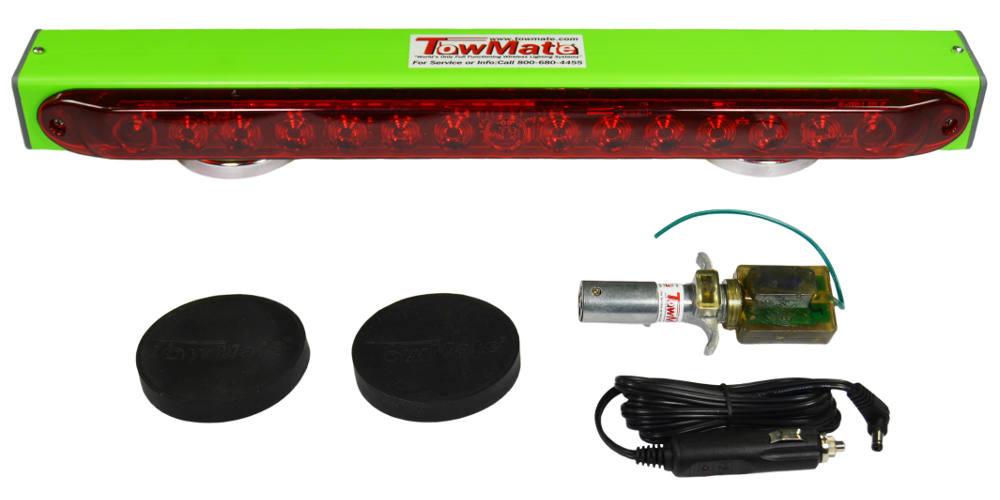
Wireless Advantage: Wireless systems win on pure deployment speed. Instead of uncoiling 30 to 60 feet of heavy cable down the frame of a disabled vehicle, you plug the transmitter into your truck’s receptacle, walk to the rear of the casualty, and slap down the heavy-duty magnetic light bar. It takes under 30 seconds. In high-traffic recovery zones, that time savings translates directly to safety.
-
Wired Reality: Running a wired setup takes a few extra minutes. You have to weave the cable safely to ensure it won’t catch on road debris, drag on the asphalt, or get pinched during sharp turns.
2. Power Management & Runtime
-
Wired Advantage: Wired lights offer infinite runtime. They draw power directly from your tow vehicle's 12V system. If you are handling an cross-country transport or an extended multi-hour recovery operation, you never have to worry about a battery dying mid-route.
-
Wireless Reality: Wireless lights run on internal rechargeable lithium batteries. Premium commercial systems are highly efficient—offering roughly 15 to 20 hours of continuous runtime on a single charge. For standard local towing and recovery rotations, this is more than enough capacity, provided the team remembers to pop the bar back into the cab charger between calls.
3. Durability, Wear, and Tear
-
The Wireless Case: Because there are no external cables, wireless systems eliminate the number one cause of auxiliary light failure: torn, frayed, or pinched wires. The primary wear item here is the internal battery over several years of hard service.
-
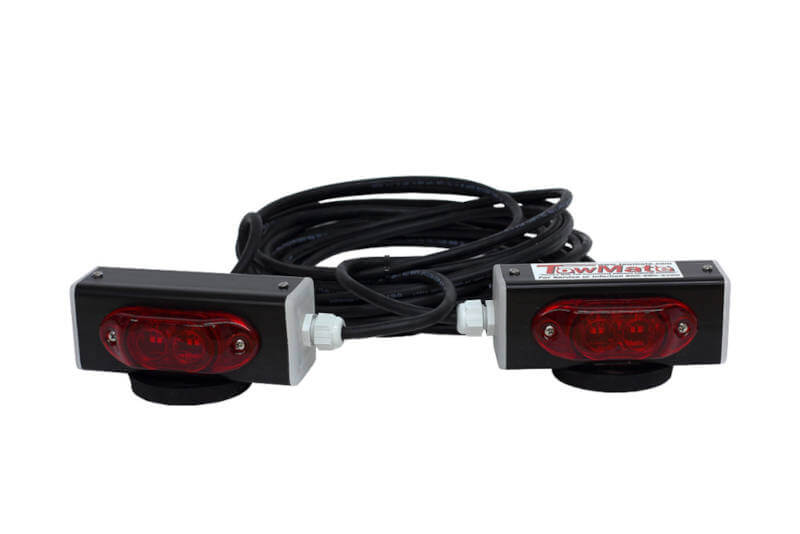
The Wired Case: A high-quality wired light box is incredibly rugged. There are no internal electronics to worry about charging, and the housing can take a beating. However, you will inevitably replace cables and 7-way plugs over time due to exposure to road salt, moisture, and mechanical strain.
4. Signal Reliability
-
Wired: A physical copper connection gives you 100% reliable signal transmission with zero latency. Turn signals, brake lights, and hazards match your cab instantly.
-
Wireless: Modern commercial wireless tow lights utilize advanced 2.4GHz digital pairing with frequency-hopping technology. This prevents signal drift or interference from nearby CB radios, emergency vehicles, or other wireless rigs on the same stretch of highway. They function flawlessly at distances up to 1,000 feet, which is plenty of range for long-wheelbase heavy wreckers.
Which Is Best for Your Fleet?
Choose Wired Tow Lights If:
- You tow the same trailer or vehicle regularly.
- You want the lowest upfront investment.
- You routinely perform long-distance towing.
- Your fleet has permanent towing configurations.

Choose Wireless Tow Lights If:
- Your drivers tow multiple vehicles each day.
- Fast hookups improve productivity.
- You want to eliminate cable management.
- Your fleet values flexibility and portability.

Many Professional Fleets Use Both
Many towing companies find that the best solution isn't choosing one or the other—it's having both available.
A wired setup works well for dedicated trailers or repeat-use vehicles, while wireless tow lights provide unmatched convenience for quick recoveries, roadside assistance, auction transport, or temporary towing jobs.
Having both options allows operators to match the equipment to the task instead of forcing one solution to fit every situation.
Find the Right Tow Lights at Baremotion
Whether you're looking for dependable wired tow lights or the convenience of today's wireless LED tow light bars, Baremotion offers professional-grade lighting solutions for towing companies, fleet operators, roadside assistance professionals, and equipment haulers. The selection includes magnetic wired light bars, advanced wireless systems, replacement accessories, work lights, and safety lighting designed for demanding commercial use.
-
Ready to cut the cord? Browse our [Wireless Towing Light Systems].
-
Prefer classic endurance? Check out our [Heavy-Duty Wired Towing Lights].
- Choosing a selection results in a full page refresh.