



-
MENU









The Ultimate Guide to Grade 80 Lifting Chain Slings
When it comes to heavy lifting in construction, manufacturing, or industrial settings, the equipment you choose plays a critical role in safety and efficiency.
Among the variety of lifting tools available, Grade 80 chain slings stand out as a reliable effective and versatile choice.
Grade 80 chain slings are particularly suitable when the required working load is less demanding than what Grade 100 slings are designed to handle. They provide a strong, durable, and cost-effective solution, making them a viable option for many lifting operations without the need for higher capacity equipment.
This guide will explore the features, benefits, and various configurations of Grade 80 lifting chain slings.

What are Grade 80 Alloy Steel Chains?
Grade 80 alloy steel chains are high-strength chains designed for lifting and rigging applications. Made from a durable alloy steel, they offer exceptional tensile strength, wear resistance, and reliability, making them ideal for industrial environments. These chains are heat-treated for added toughness and meet strict safety standards, ensuring they can handle demanding tasks with ease.
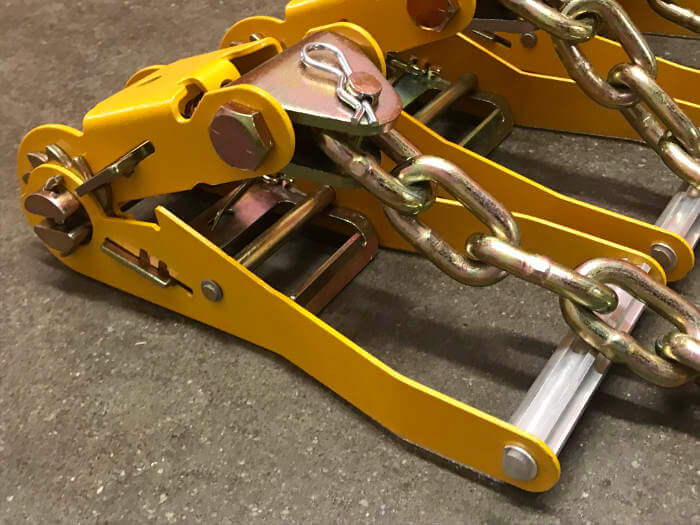
Not only ideal for heavy lifting but are also highly suitable for transportation tie-down needs, particularly for heavy haulers requiring higher working load limits than those offered by standard Grade 70 transport chains.
The key characteristics of Grade 80 lifting chains:
1. Material & Strength
-
Made from heat-treated alloy steel for exceptional strength and toughness.
-
High resistance to wear, abrasion, and impact.
2. Identification & Standards
-
Meets ASME B30.9 and NACM standards for lifting.
-
Usually color-coded (at Baremotion the Grade 80 chains are coated yellow) for quick grade recognition.
3. Working Load Limit (WLL)
-
WLL depends on chain size and sling configuration (single, double, triple, or quadruple leg).
-
For example, a 1/2" Grade 80 chain in a single-leg sling typically has a WLL of around 12,000 lbs at a 90° vertical lift.
4. Safety Factor
-
Typically designed with a 4:1 safety factor for lifting applications.
Configurations of Grade 80 Lifting Chain Slings
One of the main advantages of Grade 80 chain slings is their adaptability. They come in several configurations designed to accommodate different load requirements and lifting scenarios. Here are the primary types:
1. Single-Leg Chain Slings
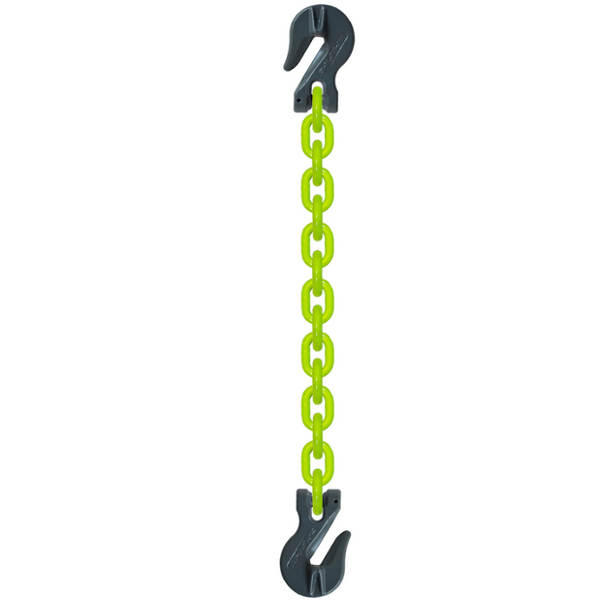
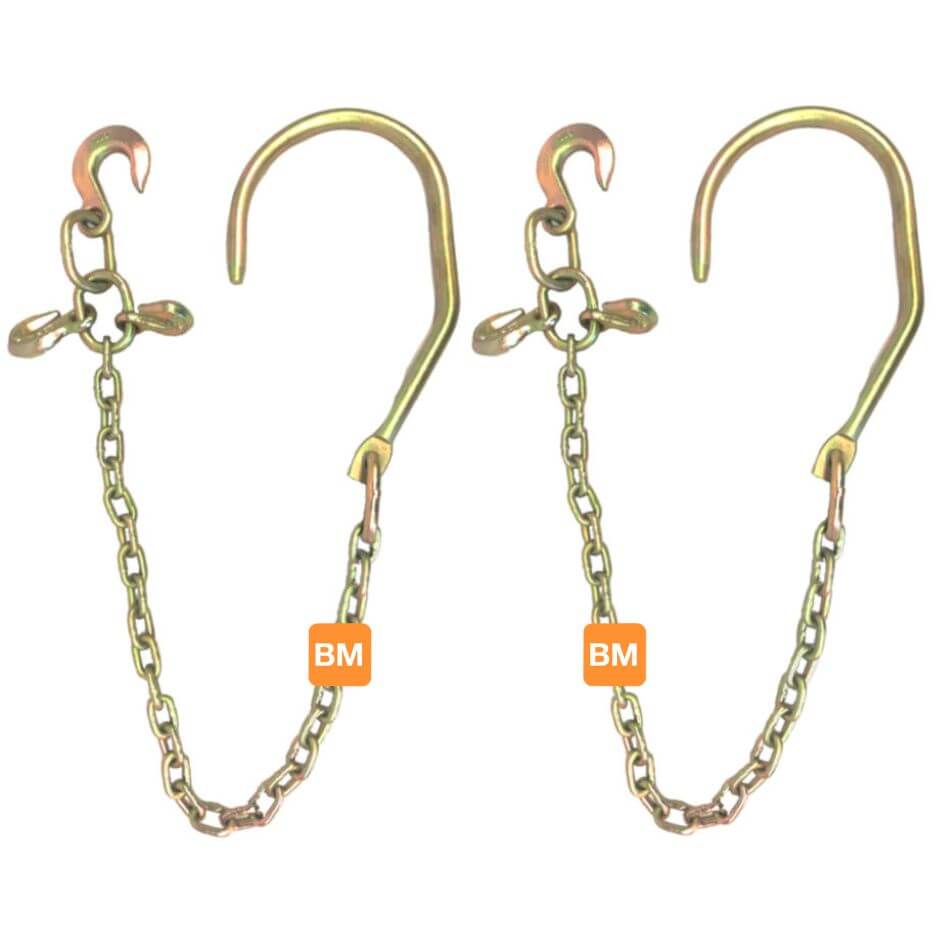
Single-leg chain slings are straightforward and commonly used for lifting lighter loads or when the load has a single lifting point. Single leg grade 80 chains are also idea for heavy transportation tie-down needs - such as Grab & Grab chains or Grab & Foundry chains).
Key Benefits:
- Easy to handle and attach.
- Suitable for vertical or straight lifting applications.
Common Applications:
- Single lifting point & heavy tie-down applications.

2. Double-Leg Chain Slings
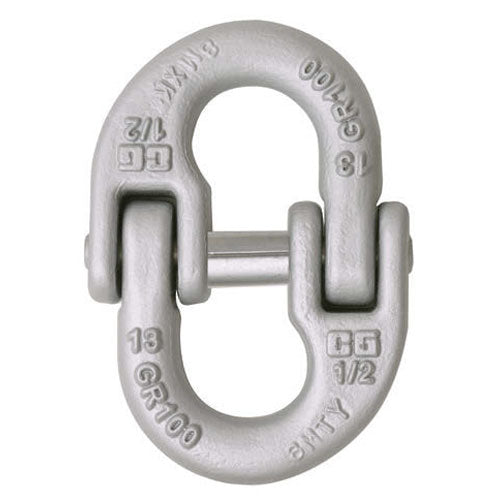
Double-leg chain slings, also called two-leg slings, consist of two chain legs attached to a master link (also known as an Oblong Link). Each leg typically has a hook, allowing the sling to secure loads at two points.
Key Benefits:
- Provides better load stability compared to a single-leg sling.
- Capable of handling heavier loads with even weight distribution.
Common Applications:
- Lifting crates, machinery, or pallets in construction or warehouses.

3. Triple-Leg Chain Slings
Triple-leg chain slings include three chain legs connected to a single master link. This configuration is ideal for loads requiring multiple lifting points for balance and stability.
Key Benefits:
- Excellent for stabilizing awkward or unbalanced loads.
- Increased capacity due to the additional lifting leg.
Common Applications:
- Hoisting irregularly shaped equipment, such as storage tanks or heavy industrial parts.
4. Quad-Leg Chain Slings
Quad-leg chain slings, or four-leg configurations, feature four lifting legs. These are the most robust and versatile option, allowing for the secure handling of extremely heavy or complex loads.
Key Benefits:
- Maximum stability and load control.
- Perfect for bulky or oversized items.
Common Applications:
- Heavy lifting in shipyards, crane, oil rigs, or large-scale construction projects.

Safety Considerations for Using Grade 80 Chain Slings
While Grade 80 chain slings are designed for strength and reliability, safety must always come first. Improper use can lead to accidents or equipment failure. Here are some critical safety tips to keep in mind:
- Always Conduct Pre-Use Inspections:
- Look for signs of wear, corrosion, deformation, or cracks i the chain and fittings.
- Ensure all components meet load rating requirements. Make sure the slings and hardware match grades
- Understand Load Limits:
- Follow the manufacturer’s load capacity guidelines for the specific configuration you’re using.
- Never exceed the working load limit (WLL).
- Use Appropriate Attachments:
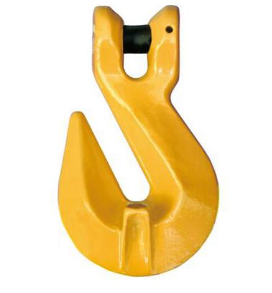
- Choose hooks, connectors, and master links that match the chain’s specifications & grade.
- Ensure compatibility for secure lifting.
- Consider Load Angle and Balance:
- Avoid extreme load angles, as they reduce the sling's capacity and compromise safety.
- Always distribute weight evenly across all legs of the sling.
- Train Your Team:
- Provide relevant training to operators to ensure they are familiar with the chain sling’s operation and safety procedures.
How to Choose the Right Chain Sling Configuration
Selecting the ideal Grade 80 chain sling configuration depends on several factors. Here are some questions to help guide your decision:
- What is the weight of the load? Ensure the capacity of the chain sling exceeds the load’s weight.
- What is the shape and size of the load? Irregularly shaped loads may require multi-leg slings for better stability.
- What is the lifting angle? Smaller angles can significantly reduce the sling’s capacity, so plan accordingly.
- What are the environmental conditions? Consider factors such as temperature, humidity, and exposure to chemicals.
- How often will the sling be used? For frequent use, prioritize durability and ease of handling.
Final Thoughts
Grade 80 lifting chain slings are strong, versatile, and reliable across several industries. Choose the right configuration for your needs and follow safety practices to ensure smooth, safe operations

✅ When selecting a chain sling, remember to inspect it regularly for signs of wear, corrosion, or damage.
✅ Proper maintenance not only ensures the longevity of the sling but also guarantees the safety of your workforce and equipment.
✅ Always store chain slings in a clean, dry area, away from chemicals or harsh environmental conditions that could compromise their integrity.
By investing in quality equipment and staying diligent with inspections and upkeep, you can maintain a safe and efficient working environment while maximizing the performance of your Grade 80 chain sling.
- Choosing a selection results in a full page refresh.