



-
MENU










Polyester Round Sling vs Web Sling vs Wire Rope Sling: Which Is Best for Your Lift?
Choosing the right lifting sling is important for safety, load protection, and efficiency. Polyester round slings, web slings, and wire rope slings are all widely used, but each performs best in specific lifting conditions.
In this guide, we compare polyester round slings vs web slings vs wire rope slings, so you can choose the best option for your lifting application.
| Sling Type | Best For | Key Advantage | Main Limitation |
|---|---|---|---|
| Polyester Round Sling | Delicate or finished loads | Excellent load protection & flexibility | Requires edge protection |
| Web Sling | General-purpose lifting | Easy inspection & affordability | Less flexible |
| Wire Rope Sling | Harsh or abrasive environments | High durability | Heavy, damages finished loads |

Polyester Round Slings
Polyester round slings are made from continuous high-strength polyester yarns enclosed in a protective sleeve. This design allows the sling to evenly distribute weight around the load.
Best Applications for Polyester Round Slings
-
Machinery and equipment lifting
-
Fragile loads
-
Applications requiring lightweight rigging
Advantages of Polyester Round Slings
-
Excellent load protection
-
Extremely flexible in basket and choke hitches
-
Lightweight and easy to handle
-
Color-coded for quick working load limit (WLL) identification
-
Reduces damage to both load and sling
Limitations
-
Must be protected from sharp edges
-
Internal damage may not be visible
-
Not suitable for extreme heat
➡️ Best choice when load protection and flexibility matter most.
👉 Shop Polyester Round Slings

Web Slings (Flat Slings)
Web slings are flat, woven slings typically made from polyester or nylon. They’re commonly used for general lifting tasks.
Best Applications for Web Slings
-
General material handling
-
Loads with wide contact surfaces
Advantages of Web Slings
-
Easy to inspect for damage
-
Cost-effective
-
Good load distribution for flat surfaces
Limitations
-
Less flexible than round slings
-
Edges and stitching wear faster
-
Can twist or bunch during lifts
➡️ A reliable general-purpose sling, but not ideal for complex or delicate lifts.
👉 Shop Web Slings

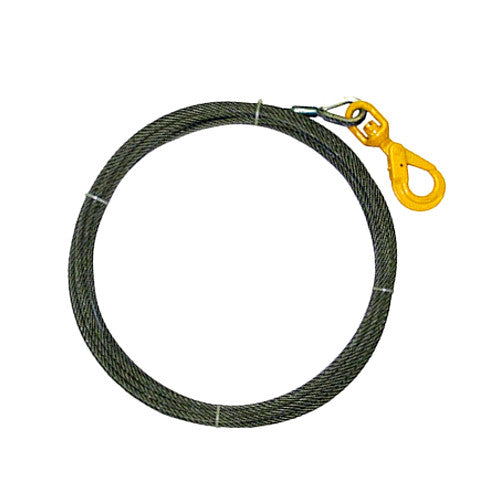
Wire Rope Slings
Wire rope slings are constructed from steel wire strands and are designed for demanding environments.
Best Applications for Wire Rope Slings
-
Steel fabrication and foundries
-
Offshore and marine lifting
-
High-temperature or abrasive conditions - construction sites.
Advantages of Wire Rope Slings
-
High resistance to abrasion and cutting
-
Performs well in hot environments
-
Long service life in harsh conditions
Limitations
-
Heavy and harder to handle
-
Can damage finished surfaces
-
Limited flexibility
➡️ Best for rugged environments where durability outweighs load protection.
👉 Shop Wire Rope Slings
How to Choose the Right Lifting Sling
Ask these questions before selecting a sling:
-
Is the load finished, fragile, or painted?
-
Are there sharp edges or abrasive surfaces?
-
Is flexibility required for the lift configuration?
-
Will the sling be exposed to heat or harsh conditions?

Simple Selection Guide
-
Polyester Round Slings → Delicate loads, flexibility, efficiency
-
Web Slings → General-purpose lifting
-
Wire Rope Slings → Harsh, abrasive, or high-temperature environments
Buy the Right Sling for Your Application
No single lifting sling fits every job. Choosing the correct sling improves safety, productivity, and equipment lifespan.
👉 Browse our range of polyester round slings, web slings, and wire rope slings to find the right solution for your lift: LIFT WITH US | BAREMOTION
- Choosing a selection results in a full page refresh.